Start with first names for the earliest writing confidence
Free to create and preview
Name Tracing Worksheets
Generate custom name tracing practice sheets in seconds. Create, preview, and download first-name or full-name practice for free without an account. Perfect for young learners building early writing skills and adults practicing handwriting consistency.
Trusted by educators worldwide
edit_note
How Do You Build a Custom Name Tracing Worksheet?
Add last names once letter spacing feels comfortable
Multiple print, cursive, and italic-friendly practice models
Create, preview, and download for free — no account required
Live worksheet builder
Enter the learner's name, pick a font, preview the page, then download the finished PDF — no account required.
Name Tracing Worksheet
Create personalized name practice sheets
Content
Configure your worksheet content and practice mode
Enter a name to practice writing
15/30 characters
Number of pages to generate
Tracing: text on every line. Copy: text + blank practice lines.
0/50 characters
Font
Choose the handwriting font style
Training
Professional training parameters for targeted practice
Training
Professional training parameters for targeted practice
Choose the writing guideline pattern for the worksheet
Choose the physical height of each writing line
Controls how much guidance is shown for letter formation
Page Layout
Paper and spacing settings
Page Layout
Paper and spacing settings
Appearance
Customize visual appearance
Appearance
Customize visual appearance
35%
20%100%
Advanced
Additional customization options
Advanced
Additional customization options
1
0.252
Preview
0 pages
Initializing...
Create, preview, and download custom name tracing worksheets for free — no account required.
What Are Name Tracing Worksheets and How Do They Work?
Name tracing worksheets are printable practice sheets that help learners write their own name by tracing a guided template. Choose a font and text style for the name: Tracing repeats the model on each practice line, while Copy adds blank ruled lines after the model for independent writing. Text style and practice mode are separate choices, so preview the result before printing. Name tracing is widely used in kindergarten and preschool settings for early handwriting acquisition, and by adults practicing neat first-name or full-name writing for everyday forms and notes—not signature design.

How Does the Generator Work?
1
Input Custom Details
Enter a first name or full name and choose a handwriting model that matches the learner's current stage.
2
Choose Font and Practice Mode
Choose a print or cursive font, then select Tracing or Copy. Set the text style, ruled guide, paper size, and orientation to suit the practice page.
3
Preview First, Download When Ready
Review the worksheet, then download a high-resolution, print-ready PDF with crisp guides directly from the generator.
How Do You Make a Cursive Name Tracing Worksheet?
Enter a first name or full name in Your Name, then open Font Family and choose a cursive model such as Prima Cursive. Select Tracing to repeat the name, or Copy to leave a blank practice line after each model. Review the spacing in the preview before downloading your free PDF.
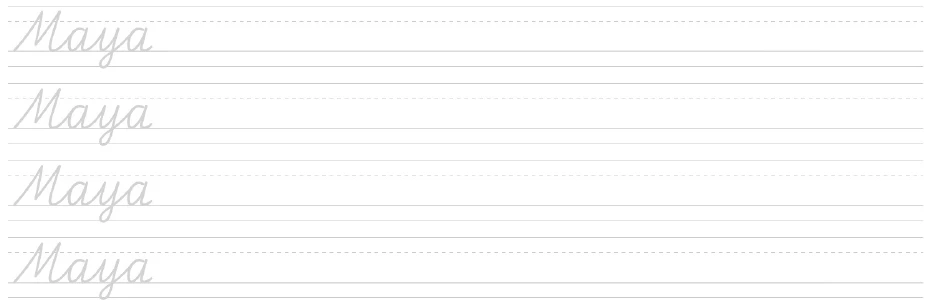
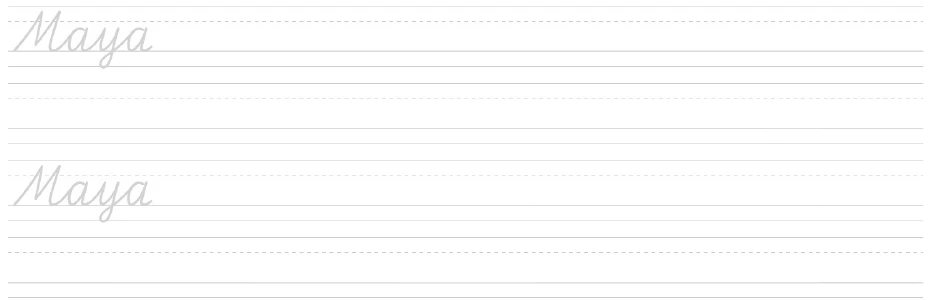
Excerpts from PDFs generated with the fictional name Maya, Prima Cursive, A4 portrait, Solid text, and 100% Text Opacity. Your result depends on the selected font and layout; these are not default settings.
Who Benefits from Name Tracing?

Preschoolers
Little learners discovering the joy of identifying and writing their own names for the first time.
Adult Penmanship
Adults practicing handwriting consistency and pen control for everyday writing.

Busy Teachers
Create a personalized sheet for each learner by entering one name at a time, then preview and download each PDF separately.

When Should You Use These?
check_circle
Beginner Fundamentals
Use when first introducing letter shapes and names to prevent bad habits before they form.
check_circle
Fluency Improvement
Transition to "Copy Mode" when the student can recognize the name but needs speed and consistency.
check_circle
Morning Starters
Perfect as a 5-minute warm-up activity to settle a classroom or home-school environment.
Which Names Work Best for Tracing Practice?
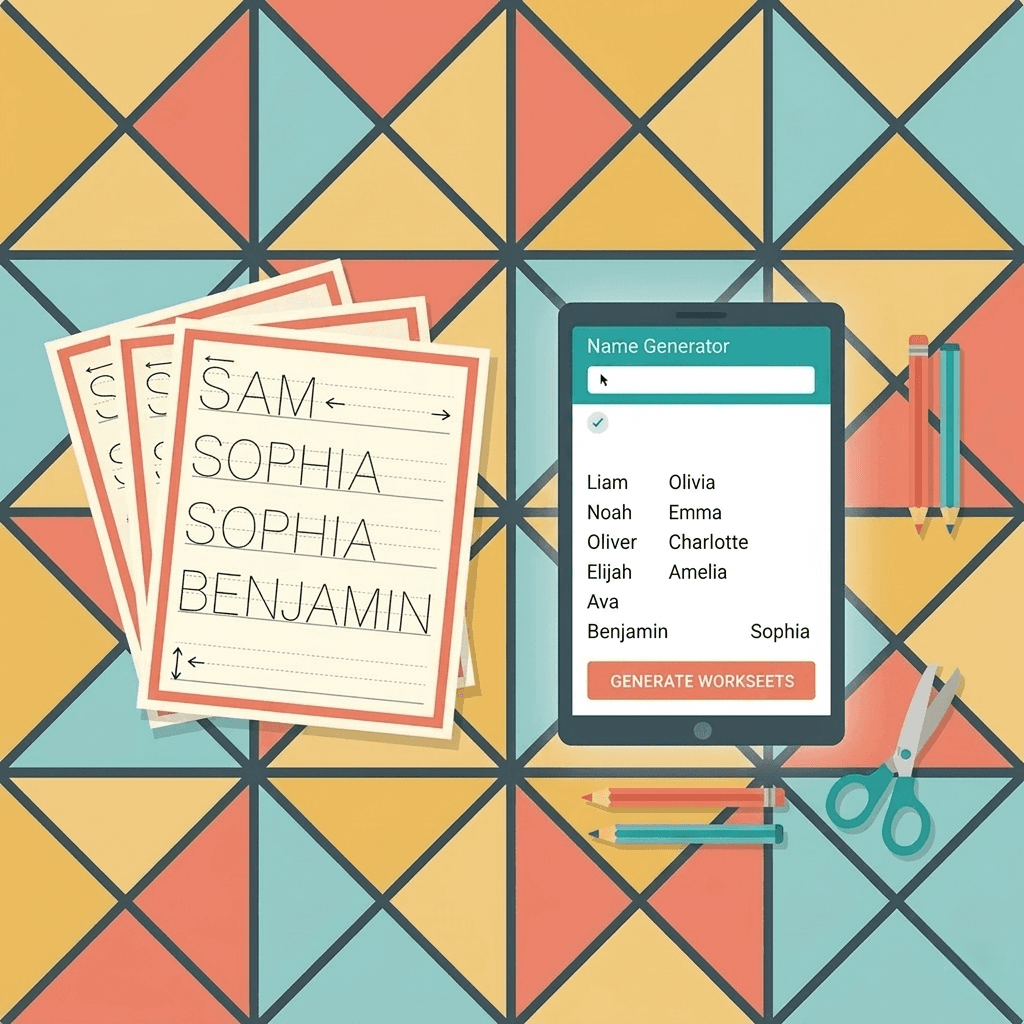
Enter a first name or full name within the 30-character field limit, including spaces between names. Shorter names like "Anna" or "Sam" are ideal for beginners building confidence in letter formation. For a longer name, preview the line breaks and spacing; try a wider layout or practise the first name before the full name if needed. Adults can use the same generator for consistent everyday name writing, a practice explored in our guide to name-writing practice and motor memory. Teachers use the generator for entire classroom name lists by entering each name individually, supporting early learning as covered in our overview of why good handwriting matters.
How Many Times Should a Child Trace Before Writing Independently?
Most children benefit from tracing the same name 5–10 times before attempting freehand writing. Start with the dotted (outlined) style for maximum guidance, then transition to the solid style when the child demonstrates consistent letter formation. Once the child can write the name correctly without any tracing support for 3 consecutive practice sessions, move to a blank-line copy sheet. The key indicator of readiness is not a fixed number of tracings but the child's ability to form each letter from memory with correct stroke order and proportion. If a child resists a particular name, try a nickname or shorter variant first to build confidence.
Common name-tracing mistakes
Name tracing serves early writers and adults who need neat name practice. Keep the page on tracing worksheets—not artful signature design.
Tracing with a name that is too long for the line
Preview a first name or a wider layout before using the full name; keep the model readable.
Practicing only capitals when mixed case is needed
Generate a mixed-case variant when the learner needs everyday first-name or full-name writing.
Treating this tool as signature design
This is a tracing worksheet for name writing practice, not an art-signature generator.
If you already have a writing sample and want a structured legibility check, sign in for an optional handwriting check. New accounts get one free handwriting check after sign-in. Optional: handwriting check.
Frequently Asked Questions
Create a custom name tracing sheet
Create, preview, and download first-name or full-name practice for free — no account required.