Complete A–Z set — choose letter case and lines per letter
verifiedFree to create and preview — no sign-in required
Alphabet Tracing Worksheets
Create custom A-Z tracing sheets in lowercase, uppercase, or both. Choose a font, ruled guide, line height, and Tracing or Copy mode. Select US Letter or A4, check the final page count in the preview, then download your free PDF.
PrintableHandwriting
How Does the Alphabet Tracing Worksheet Generator Work?
Create, preview, and download your alphabet worksheet for free — no account required.
Generate the complete A–Z alphabet in uppercase, lowercase, or paired cases. Choose a print or cursive font, then use Tracing for guided letter practice or Copy for a model followed by blank practice lines. Select A4 or US Letter paper in portrait or landscape orientation. The default layout uses one letter per page; Lines Per Letter can combine letters across fewer pages. Check the preview for the final page count before downloading.
StylesFonts
A–ZFull Set
PDFPrint-Ready
descriptionAlphabet Worksheet Preview
Example LayoutUppercase · Solid
ABCDE…
Lowercase · Dotted Tracing
abcde…
Cursive · DancingScript
ABCDE…
DeliusEdu SA HandItimPrima CursiveDancingScriptMore styles
text_fields
3 Text Styles
Choose between solid, outlined, or dotted letterforms to match your student's progression and confidence level.
sort_by_alpha
Full A-Z Coverage
Generate complete sets from A to Z, including both uppercase and lowercase variations in various sizes and orientations.
near_me
Font-Specific Stroke Hints
Writing-step includes stroke hints within its letter shapes. Other fonts provide different letter models; check your selected font in the preview before printing.
How Do You Create a Custom A-Z Tracing Worksheet?
Print and cursive fonts for different letter models
Solid, outlined, or dotted letters for tracing or copy practice
Create, preview, and download for free — no account required
Live worksheet builder
Pick a font, letter case, and page layout, then check the preview for the final page count and download your PDF — no account required.
Alphabet Tracing Worksheet
Create the full A–Z set; preview your selected page layout
Content
Configure your worksheet content and practice mode
Choose which letter cases to practice
Number of practice lines per letter (empty = one letter per page)
0/50 characters
Tracing: text on every line. Copy: text + blank practice lines.
Font
Choose the handwriting font style
Training
Professional training parameters for targeted practice
Training
Professional training parameters for targeted practice
Choose the writing guideline pattern for the worksheet
Choose the physical height of each writing line
Controls how much guidance is shown for letter formation
Page Layout
Paper and spacing settings
Page Layout
Paper and spacing settings
Appearance
Customize visual appearance
Appearance
Customize visual appearance
35%
20%100%
Advanced
Additional customization options
Advanced
Additional customization options
1
0.252
Preview
0 pages
Initializing...
Create, preview, and download custom alphabet tracing worksheets for free — no account required.
View a ready-made practice resource
Want a PDF now? Open a reviewed practice resource, read the print notes, and download it without an account.
Alphabet formationA426 pages
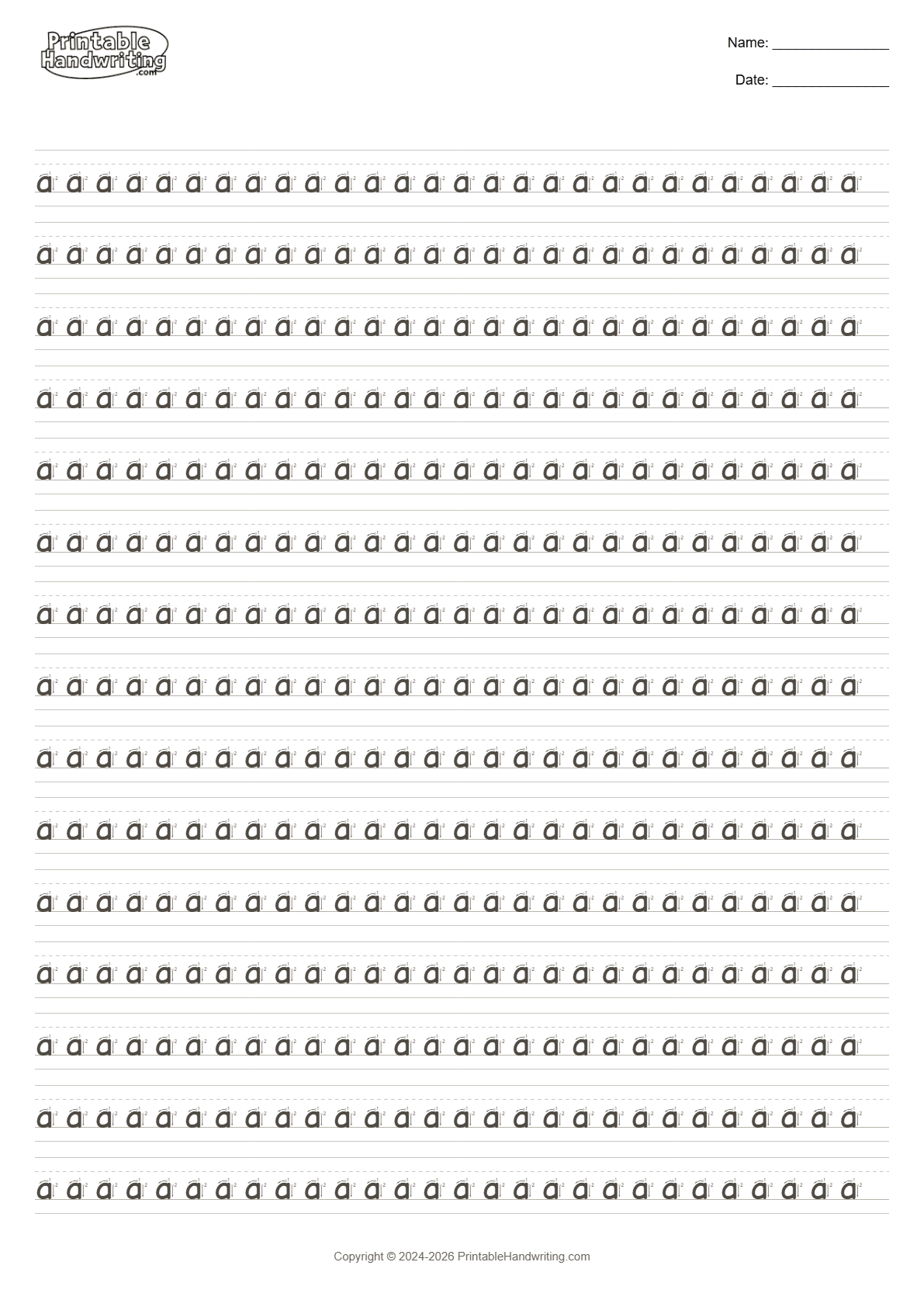
Lowercase Alphabet Formation Pack
A complete a–z practice pack with one lowercase letter per page and repeated dotted models on four-line ruled guides.
View practice resource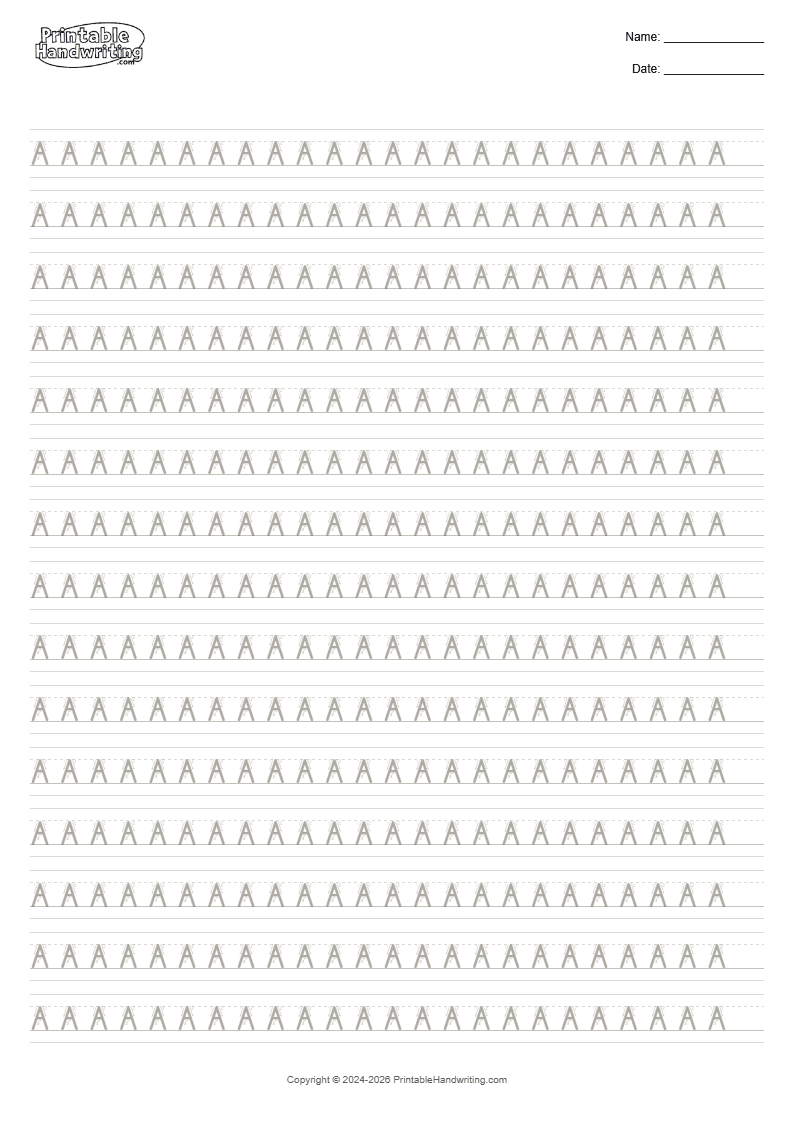
Alphabet formationA426 pages
Uppercase Alphabet Formation Pack
One uppercase letter per page from A to Z, with a consistent ruled model and space to compare height, width, and baseline.
View practice resourceWho Is Alphabet Tracing For?

Toddlers
Building foundational hand-eye coordination and letter recognition.

Students
Mastering consistent letter formation and improving handwriting speed.

Teachers
Quickly creating professional classroom materials and homework sheets.

Therapists
Developing precise fine motor control for rehabilitation or development.
What Does Each Tracing Worksheet Include?
Designed for focused, structured letter practice
near_me
Font-Specific Letter Models
Choose a print or cursive letter model that matches your practice goal. Writing-step includes stroke hints in its glyphs; those hints are not included in every font.
sort_by_alpha
Tracing or Copy Practice
Tracing provides letters to follow. Copy places a letter model above blank practice lines so learners can try writing the same forms independently.
gesture
Solid, Outlined, or Dotted Letters
Select the text style that makes the letter shapes easiest to follow, then check the worksheet preview before printing.
The default layout gives each letter its own page. Setting Lines Per Letter can combine letters on a page; the final page count also depends on practice mode, paper size, and orientation. With ruled guides selected, a baseline, midline, and ceiling line help with letter sizing and placement. Check the preview to confirm the selected guide and letter model suit the learner before downloading.
How Do You Create an Alphabet Tracing Worksheet?
1
Choose letter case
Generate the full A–Z alphabet in uppercase, lowercase, or paired cases. The generator does not select a custom subset of letters.
2
Choose tracing style
Pick a font, text style, and Tracing or Copy mode. Set Lines Per Letter and choose A4 or US Letter in portrait or landscape.
3
Preview and download
Check the letter models, practice lines, and final page count in the preview, then download the printable PDF.
When Should You Use Alphabet Tracing Practice?
Timing your practice for maximum effectiveness
child_care
Best Starting Age
Alphabet tracing practice is most effective when introduced during the preliteracy stage — typically ages 3 to 5 — as part of a broader language-rich environment that includes letter recognition activities, phonetic awareness exercises, and exposure to printed text.
schedule
Effective Practice Schedule
A typical effective practice schedule involves tracing 2 to 4 letters per session, repeating each letter across multiple practice sessions before introducing new ones, which motor memory research supports as a method for longer-term retention of letter formation patterns.
Children who have begun identifying letter names and sounds benefit from the kinesthetic reinforcement that tracing provides, connecting the visual shape of a letter to the motor pattern required to produce it. The full A-to-Z sequence, practiced consistently, typically spans 4 to 8 weeks depending on session frequency and individual child pace. This structured approach ensures each letter receives sufficient practice before moving to the next, building a reliable motor memory for all 26 letter forms.
[1] Motor memory and skill acquisition research: American Occupational Therapy Association (AOTA) guidelines on handwriting instruction.
Practice Scenarios for Better Letter Formation
check_circle
Master Stroke Order
Correct mechanics from day one prevents bad habits that slow down writing later in life.
check_circle
Consistent Sizing
Use our guided baseline grids to ensure letters remain proportional and evenly spaced.
check_circle
Build Muscle Memory
Repetitive motion on high-quality tactile guides reinforces the brain-to-hand connection.

How Does This Tool Compare to Other Handwriting Practice Methods?
Choose a layout and letter model for your practice goal
view_module
Flexible Letter Practice
Use the default one-letter-per-page layout for focused practice, or set Lines Per Letter to combine letters. Preview the result to choose a manageable amount of practice.
font_download
Print and Cursive Fonts
Choose a print or cursive font to match your classroom letter model or personal practice goal. Preview the letter shapes before downloading rather than assuming all fonts use the same formation guides.
print
Printable PDF Output
Unlike tracing apps or tablet games, printable worksheets produce a tangible physical artifact usable in any environment, including classrooms without consistent device access.
If letter drills stall, compare one familiar letter at a time, keep the same line guide, and return to tracing lines or lowercase practice when stroke control or lowercase forms are still the limiting step.
Learn more about cursive vs print handwriting and find the right approach for your child's learning journey.
Common alphabet tracing mistakes
Keep alphabet tracing on letter formation for children and beginners. Move to words only after the letters you need next are repeatable.
Tracing without saying the stroke cues
Pair the visual trace with stroke-order cues so formation sticks beyond the dotted line.
Only uppercase for readers who need lowercase
Use a lowercase sheet when everyday reading and writing depend on those forms.
Jumping to words before target letters are stable
Stay on formation drills until the letters needed for the next word are repeatable; there is no universal letter count that fits every learner.
Frequently Asked Questions
At what age should children start alphabet tracing worksheets?expand_more
Can adults use alphabet tracing worksheets?expand_more
What fonts are available on the alphabet tracing worksheets?expand_more
How many letters are included in each worksheet set?expand_more
What paper sizes and practice modes can I choose?expand_more
Does every font include stroke-order arrows?expand_more
Do I need to sign in to use the generator?expand_more
Start mastering the alphabet today
Create, preview, and download alphabet worksheets for free — no account required.
From the creator of PrintableHandwriting — built for educators and learners worldwide.