9 line patterns — straight, zigzag, wavy, spiral, and more
auto_awesomeFoundational line drills
Free Printable Line Tracing Worksheets
Generate free printable line tracing worksheets for pen control at home or in class. Use this page when stroke control is still the blocker, then move up to letters or words only after the line work feels stable.
Create, preview, and download your line tracing worksheet for free — no account required. If your strokes already look stable, it may be time to move up to alphabet or print practice instead.
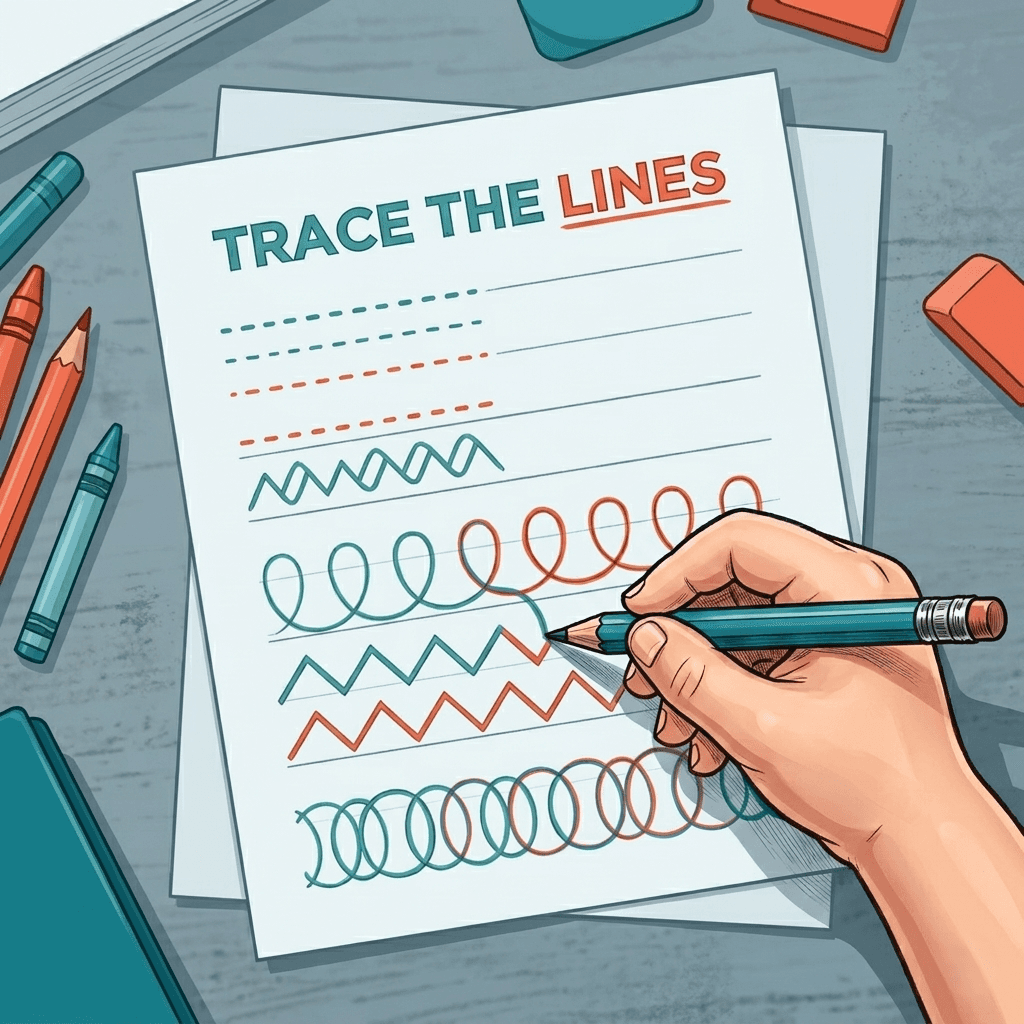
How Do You Create a Custom Line Tracing Worksheet?
Set 1 to 20 pages per worksheet for longer practice sessions
Portrait or landscape orientation to match your printing needs
Create, preview, and download for free — no account required
Live worksheet builder
Select a line pattern and page count, preview the page, then download the finished PDF — no account required.
Line Tracing Worksheet
Create line tracing practice sheets for developing fine motor skills
Content
Configure your worksheet content and practice mode
Large movements use fewer, more widely spaced patterns on each page.
Number of pages to generate
Training
Professional training parameters for targeted practice
Training
Professional training parameters for targeted practice
Controls how much guidance is shown for letter formation
Page Layout
Paper and spacing settings
Page Layout
Paper and spacing settings
Appearance
Customize visual appearance
Appearance
Customize visual appearance
2
15
80%
20%100%
Advanced
Additional customization options
Advanced
Additional customization options
0/50 characters
Preview
0 pages
Initializing...
Create, preview, and download custom line tracing worksheets for free — no account required.
View a ready-made practice resource
Want a PDF now? Open a reviewed practice resource, read the print notes, and download it without an account.
How Does the Line Tracing Generator Work?
Our intuitive tool allows you to customize learning in seconds. Simply select your pattern, adjust the difficulty settings, and generate a high-quality PDF ready for the classroom or home practice.
gesture
1. Pick Pattern
tune
2. Adjust Style
print
3. Print & Practice
Free instant preview with every generation
Why Is Pen Control the Foundation of Legible Handwriting?
Pen control is the ability to control a writing instrument with precision and stability. Line tracing worksheets develop fine motor coordination, hand-eye coordination, andstroke consistency — the three pillars of comfortable, legible handwriting.
Unlike letter-specific practice, line tracing isolates the fundamental stroke patterns that underlie every letterform: vertical strokes, horizontal strokes, curves, and connectors. This makes it the ideal starting point for anyone building or rebuilding handwriting skills, regardless of age.
precision_manufacturing
Motor Memory
Builds neurological pathways for consistent hand movements
visibility
Visual Tracking
Improves how eyes follow a path and direct the hand
psychology
Focus & Patience
Develops discipline for complex writing tasks

Consistent line practice trains the small muscles in the hand and wrist, reducing writing fatigue and improving letter spacing over time. When stroke control stabilizes, move on to alphabet tracing.
If you already have a writing sample and want a structured legibility check, sign in for an optional handwriting check. New accounts get one free handwriting check after sign-in. Optional: handwriting check.
Who Can Benefit from Line Tracing Practice?
Line tracing serves the widest age range of any handwriting tool — from 3-year-olds building pre-writing reflexes to seniors reclaiming fine motor function after injury.Print handwriting worksheetsbuild foundational skills, whileergonomic pencil grip practiceensures comfort during extended sessions.
child_care
Preschoolers & Toddlers
Early learners (ages 3–5) discovering how to hold a crayon. These worksheets turn "scribbling" into intentional creative practice.
person
School-age Children
Children ages 6–12 reinforcing letter formation baselines and fixing inconsistent slant or sizing issues.
elderly
Adults & Seniors
Adults rebuilding pen control after technology under-use, Parkinson's, or essential tremor.
health_and_safety
Occupational Therapists
Professionals working on fine motor rehabilitation who need specific patterns for targeted therapy goals.
school
Classroom Teachers
Educators using line tracing in classroom warm-ups to prepare students for cursive instruction.
home
Homeschool Educators
Parents seeking structured, high-quality resources to supplement their daily handwriting curriculum.
How Do I Use These Line Tracing Worksheets?
1
Select Pattern
Choose from 9 line patterns to match your skill level.
2
Set Pages & Layout
Choose page count (1–20) and portrait or landscape.
3
Generate Preview
Click "Preview" — no account needed, instant results.
4
Download PDF
Save your high-resolution A4 worksheet directly from the generator.
5
Print and Practice
Open your downloaded PDF and practise the pattern at a comfortable pace.
Free PDF download with every generation
What Line Patterns Does the Generator Support?
Our generator produces nine distinct dotted line patterns, each targeting a specific motor movement used in handwriting. All patterns use dotted guide lines — the optimal intermediate step between tracing solid shapes and producing independent marks.
vertical_align_top
Straight Lines
Four cardinal directions for letter construction
Vertical
Up-down control
Horizontal
Left-to-right fluency
Left Slant
Diagonal (k, v, w)
Right Slant
Diagonal (x, y, z)
sync_alt
Curve Patterns
Rotational movements for rounded letterforms
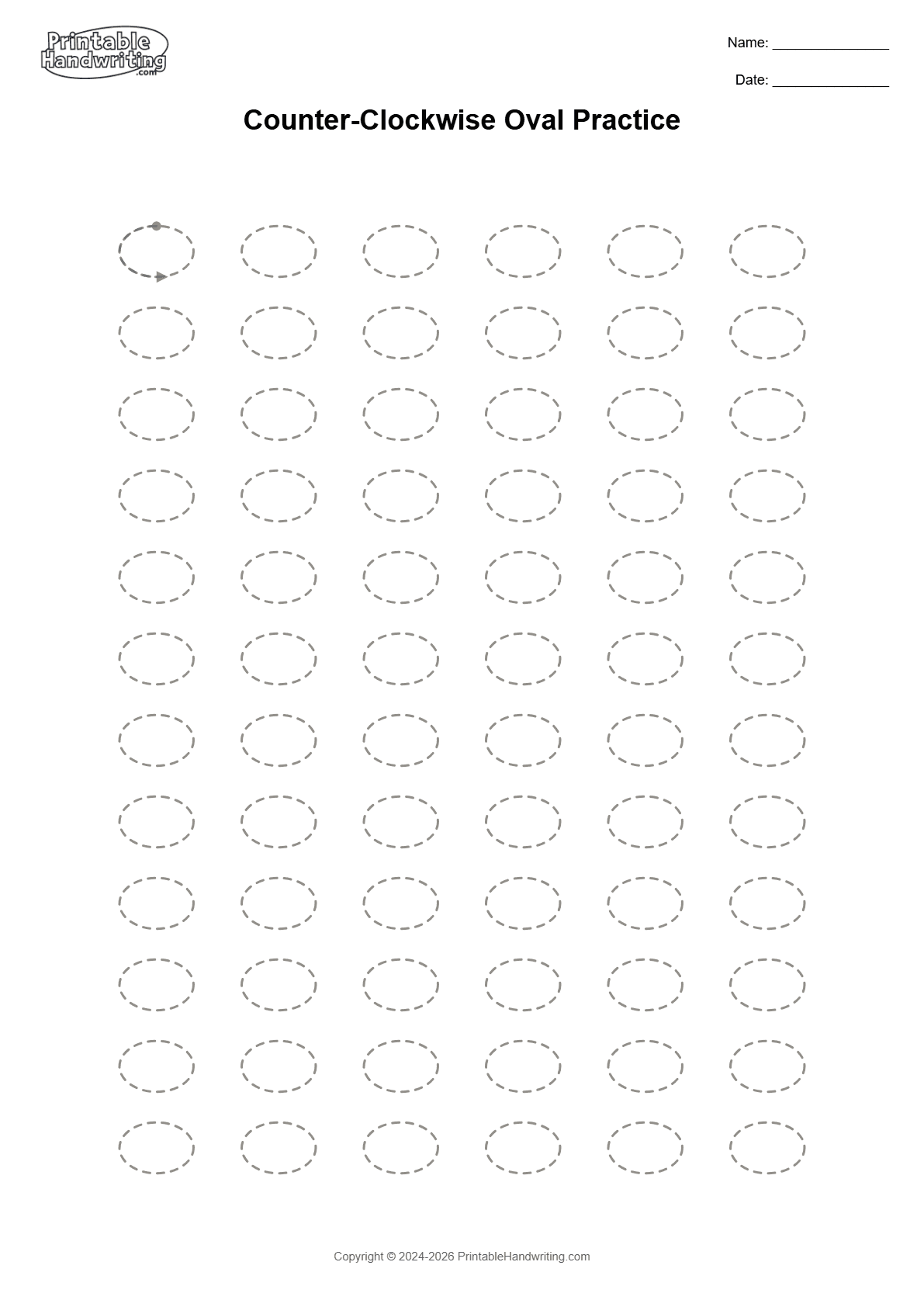
CCW Oval
Rotational (c, o)
CW Oval
Rotational (e, s)
Wave
Smooth transitions
link
Connector Patterns
Linking movements between letters
Upstroke
Rising links (l, t, k)
Downstroke
Falling links (r, n, m)
Once you have mastered the nine fundamental stroke patterns, cursive handwriting worksheets apply these same movements to connected letterforms.
What Is the Best Way to Practice Line Tracing?
Consistency over duration is the secret to handwriting success. Short, 10-minute sessions daily are far more effective than an hour once a week. This "micro-practice" builds muscle memory without causing hand fatigue. For structured progression, master one pattern type before moving to the next — vertical lines first, then horizontal, then curves.
Start with larger patterns and gradually move to smaller, more intricate ones as the student's confidence and control improve. Once all nine patterns are mastered in isolation, alphabet tracing worksheets combine them into letterforms. Remember: the goal is fluid motion, not perfection. See why good handwriting matters for the cognitive benefits of consistent practice.
speed
Slow and Steady
Rushing leads to shaky lines. Encourage slow, deliberate strokes.
ink_highlighter
Pressure Control
Vary the tools—crayons, markers, and pencils—to learn different pressures.
published_with_changes
Progressive Steps
Move from simple straight lines to complex loops over time.
Frequently Asked Questions
Everything you need to know about line tracing practice for handwriting improvement
Common pen-control line mistakes
Line tracing is for pen control and pre-writing stroke stability—not permanent letter practice.
Rushing patterns
Slow continuous strokes beat fast shaky ones when the goal is pen control.
Using lines as the only practice forever
Graduate to alphabet tracing when stroke control stabilizes enough for letter work.
Wrong difficulty
Start with waves and simpler paths before tight zigzags or dense connector drills.
If you already have a writing sample and want a structured legibility check, sign in for an optional handwriting check. New accounts get one free handwriting check after sign-in. Optional: handwriting check.