Original research series
Handwriting Efficiency Lab
Controlled writing-speed experiments that make stroke structure, pen-up travel, and total movement visible.
What this lab measures
A writing model is more than a font label.
Each experiment holds the sample text and renderer settings constant, then measures how stroke connections change completion time, characters per minute, paper-trail length, air travel, and total movement.
The videos use extracted real stroke-order paths rendered deterministically on canvas. They are original simulations, not AI-generated handwriting.
The protocol
- 01Use a fixed sample and document its case mix.
- 02Calibrate writing speed from the lowercase n reference.
- 03Model pen lifts explicitly instead of hiding them.
- 04Report metric-specific results and limitations.
Episodes
Published experiments
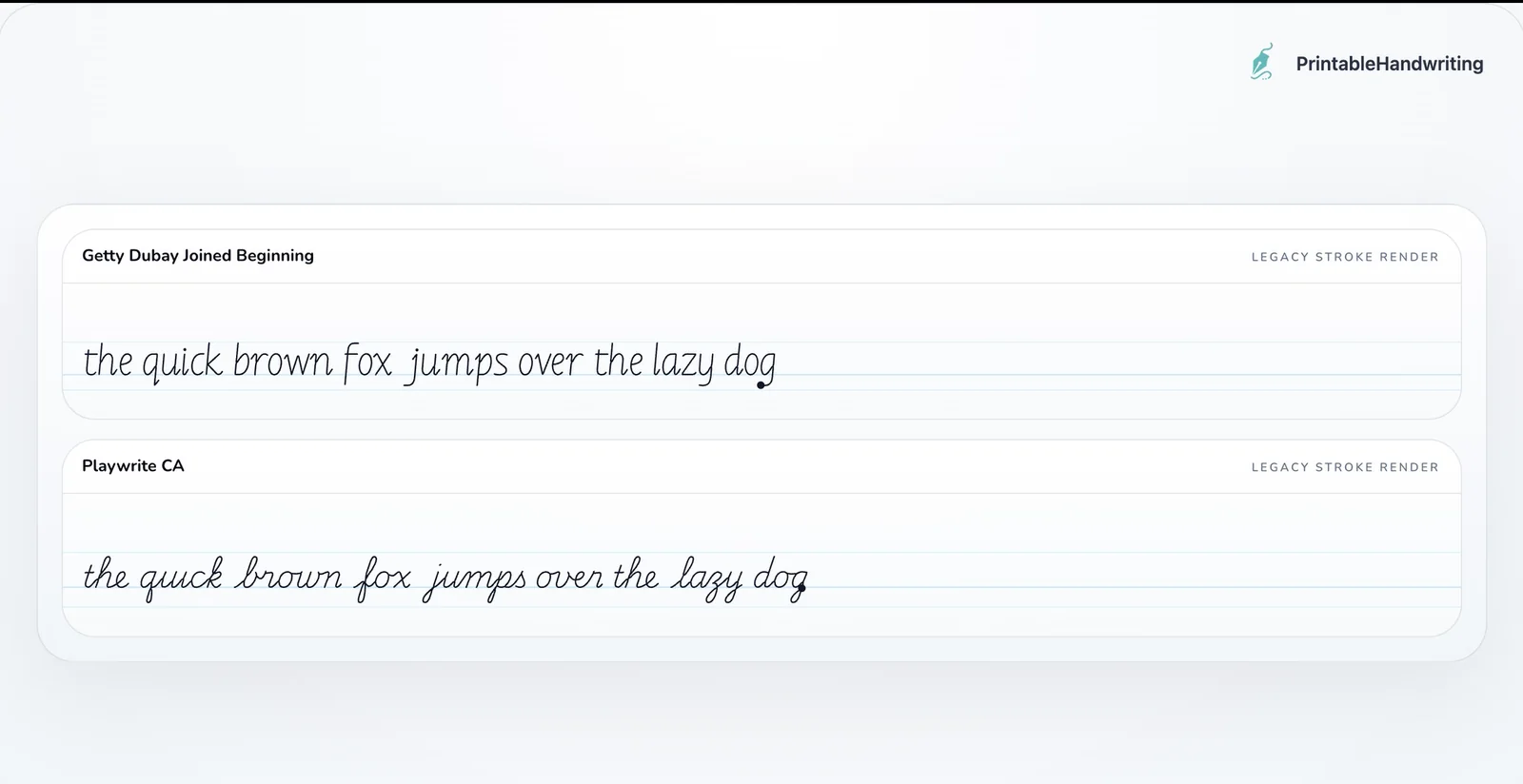
Episode 01 · Lowercase
Joined vs Less-Continuous Stroke Paths
A nine-word lowercase pangram test comparing Getty Dubay Joined Beginning and Playwrite CA across speed, paper trail, air travel, and total movement.
Read the full experiment →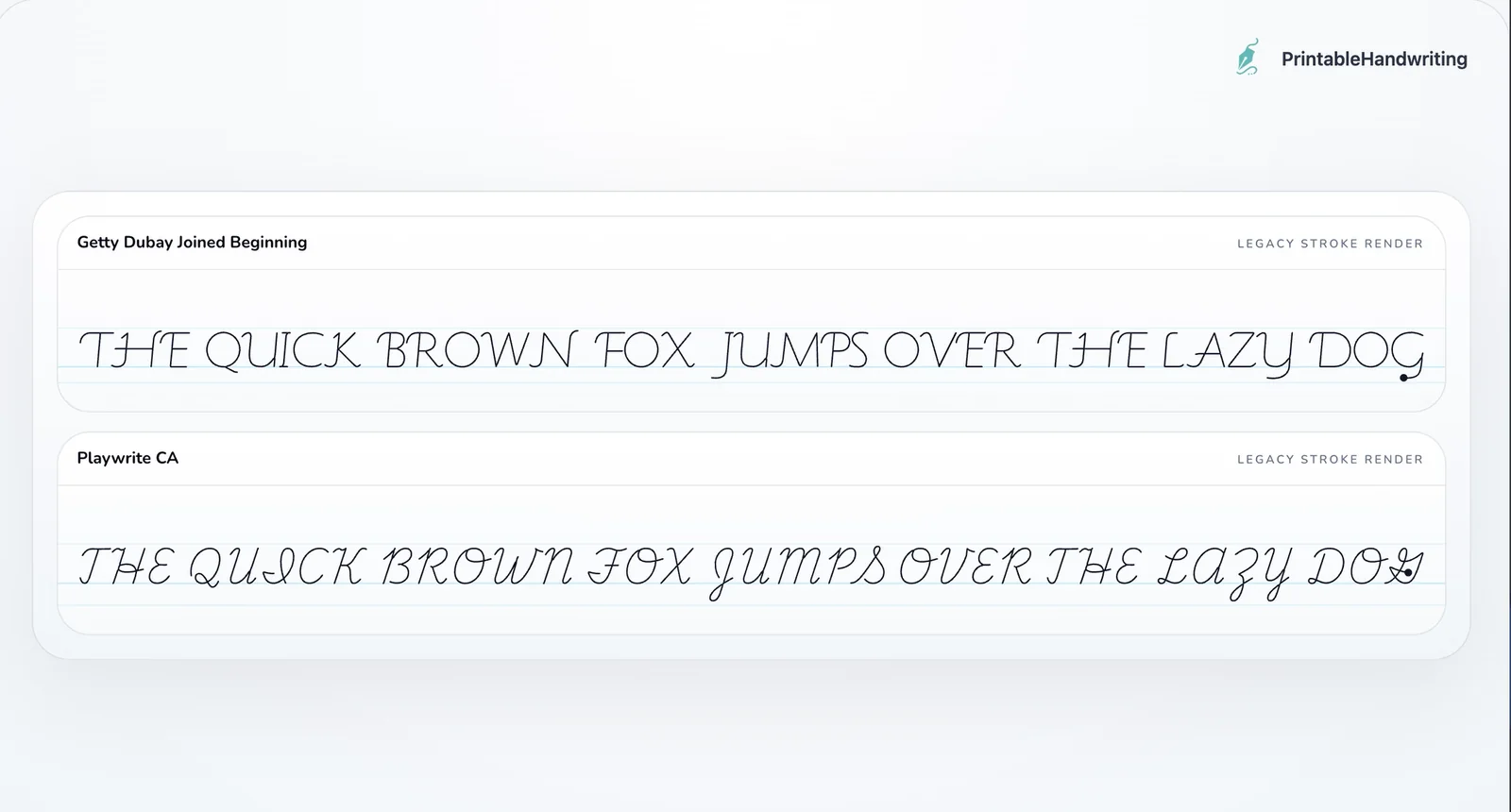
Episode 02 · Uppercase
Join and Stroke Structure
The uppercase pangram run compares completion time, characters per minute, paper trail, air travel, and total movement.
Read the full experiment →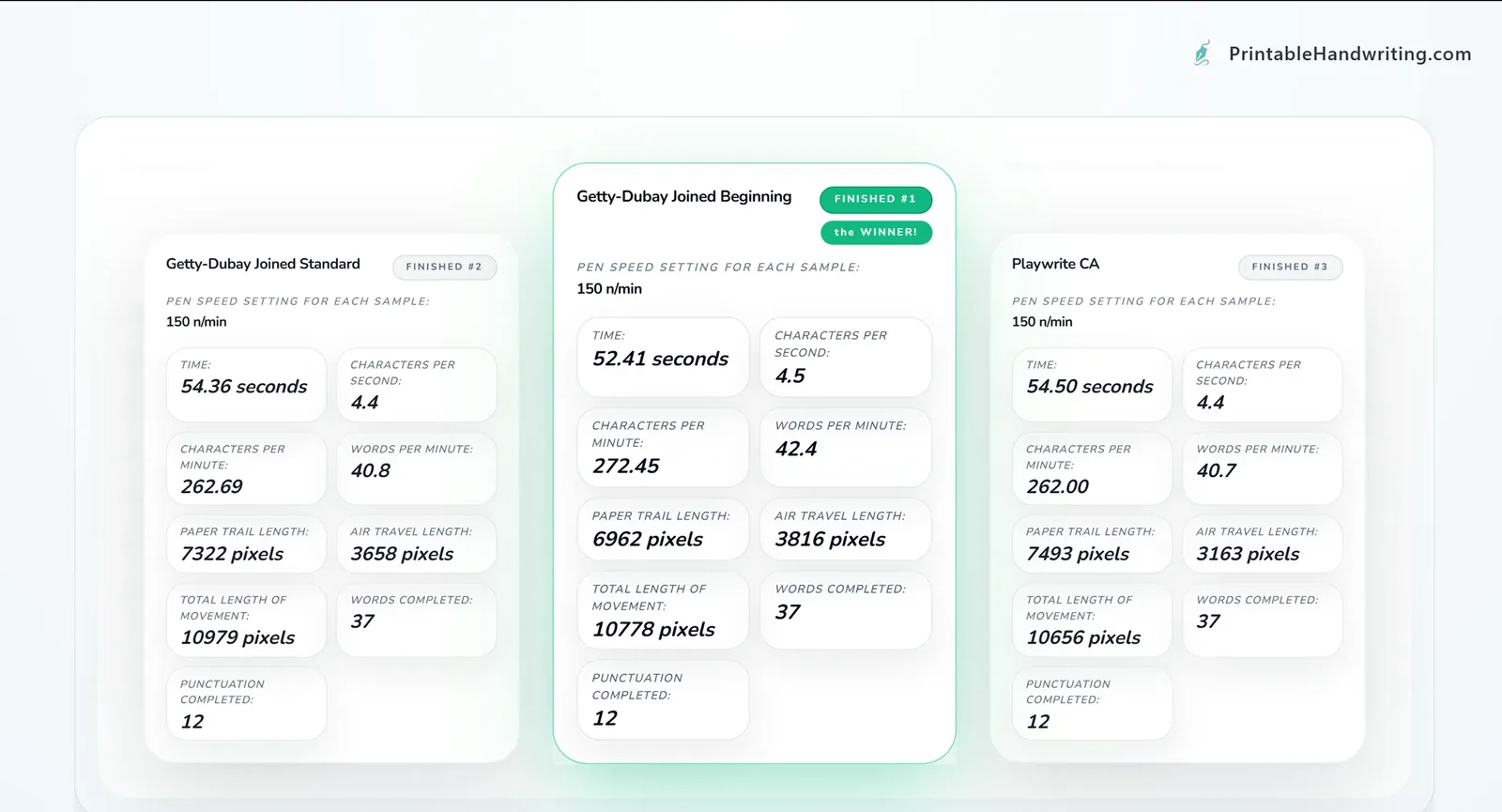
Episode 03 · Mixed text
Mixed-Text Joins and Movement
A practical 37-word sample with capitals and punctuation, comparing Playwrite CA with two Getty-Dubay joined models.
Read the full experiment →The lab compares writing-model structure under defined renderer settings. It does not rank fonts for every writer, prove that cursive is always faster, or replace a legibility or learning study.